

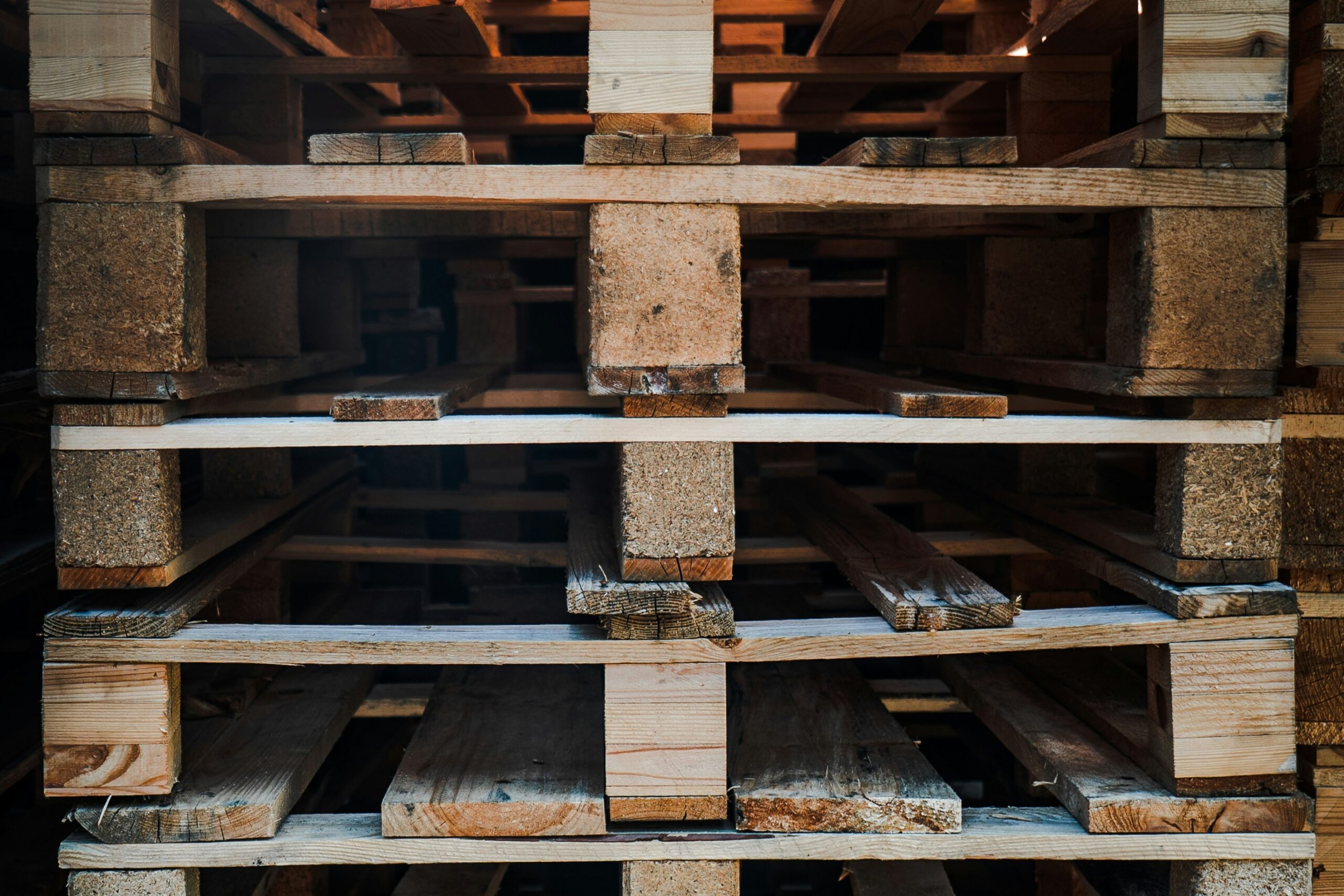
Knowing how to choose the right pallet for your business comes down to four core factors: load capacity, pallet material, size, and whether you need new or recycled stock. Most businesses in the Dallas TX area use standard 48×40 inch pallets rated between 1,500 and 3,000 pounds.
This guide covers everything from wood versus plastic pallets to local supplier tips for neighborhoods like Pleasant Grove, Oak Lawn, and West Oak Cliff. By the end, you will know exactly what to order and why.
Understand the Basic Types of Pallets Available
Before you can pick the right pallet, you need to know what options exist. The market offers several distinct pallet types, each suited to different industries and use cases.
- Stringer pallets: Built with boards running along the length. Common in grocery, retail, and light manufacturing.
- Block pallets: Four-way entry design supported by blocks in each corner and center. Stronger and better for heavy loads.
- Heat-treated pallets (HT): Required for international shipping under ISPM-15 regulations. Marked with an HT stamp.
- Recycled or reconditioned pallets: Budget-friendly option for internal use, warehousing, or single-use shipping.
- Plastic pallets: Longer lifespan, hygienic, and moisture-resistant. Ideal for food, pharma, and chemical industries.
- Custom pallets: Built to specific dimensions for oversized or irregularly shaped products.
Pallets of Texas stocks all of these types and can help Dallas-area businesses identify the best match for their workflow quickly.
Compare Wood vs. Plastic Pallets for Your Operation
The wood versus plastic debate is one of the most common questions businesses face. The right choice depends on your industry, budget, and how many times each pallet will be used.
| Factor | Wood Pallets | Plastic Pallets |
|---|---|---|
| Average Cost | $8 to $25 per pallet | $40 to $120 per pallet |
| Load Capacity | 1,500 to 3,000 lbs | 2,000 to 5,000 lbs |
| Lifespan | 3 to 5 years with care | 10+ years |
| Moisture Resistance | Low to moderate | High |
| Repairability | Easy and inexpensive | Difficult |
| Best For | General shipping, warehousing | Food, pharma, chemical |
| Eco-Friendliness | Recyclable and biodegradable | Recyclable but slower to degrade |
For most small to mid-sized businesses in areas like Northwest Dallas TX, Cedar Crest TX, and Ledbetter Hills TX, wood pallets offer the best balance of cost and performance.
Plastic pallets are worth the investment if your products require sanitary handling or if your pallets travel through a closed-loop supply chain where you retrieve them after delivery.
Match Pallet Size to Your Product and Storage System
The standard 48×40 inch pallet fits most racking systems, truck trailers, and loading docks. However, choosing the wrong size can lead to wasted space, product damage, or forklift compatibility issues.
Here are the most common pallet sizes and their typical applications:
- 48×40 inches: The most universal size. Used in grocery, retail, and general warehousing across the United States.
- 42×42 inches: Popular in the paint and telecom industries. Fits some European racking systems as well.
- 48×48 inches: Common for drums, barrels, and round containers.
- 36×36 inches: Used in beverage distribution and beverage-related retail.
- Custom sizes: Ordered when your product footprint or racking system does not match standard options.
Always measure your racking uprights, dock doors, and truck trailer width before placing a bulk pallet order. This one step prevents costly mismatches.
Businesses in Ryanwood TX, Wynnewood TX, and Kiest Forest Estates TX often serve regional distribution chains that require strict pallet size compliance. Confirm your buyer or carrier requirements before you order.
Evaluate Load Weight and Product Fragility
Load capacity is one of the most overlooked factors when businesses choose pallets. Overloading a pallet leads to product damage, worker injuries, and costly replacements.
| Pallet Type | Static Load Capacity | Dynamic Load Capacity | Racking Capacity |
|---|---|---|---|
| Standard Wood Stringer | 2,500 to 3,000 lbs | 1,500 lbs | 1,000 to 1,500 lbs |
| Block Pallet (Wood) | 3,500 to 5,000 lbs | 2,500 lbs | 2,000 to 2,500 lbs |
| Plastic Pallet | 3,000 to 5,000 lbs | 2,000 to 3,000 lbs | 2,500 to 3,500 lbs |
| Recycled Wood Pallet | 1,500 to 2,500 lbs | 1,000 lbs | 800 to 1,200 lbs |
Static load capacity refers to a pallet sitting still on the floor. Dynamic capacity applies when the pallet is being moved by a forklift. Racking capacity is the weight it can hold when suspended on warehouse racking beams.
If you are shipping fragile goods like glassware, electronics, or ceramics, consider adding corner boards or stretch wrap regardless of which pallet you select. The pallet is only one layer of protection.
Decide Between New, Recycled, and Reconditioned Pallets
Budget matters. Choosing between new, recycled, and reconditioned pallets is often the deciding factor for small businesses and startups across the Dallas area.
Here is a quick breakdown of what each option means in practice:
- New pallets: Built to exact specifications. Uniform size and appearance. Best for retail display, food-grade use, or first impressions with new customers.
- Recycled pallets: Previously used and sold as-is. Minor cosmetic damage is common. Great for internal warehousing or one-way shipments.
- Reconditioned pallets: Inspected and repaired. Broken boards are replaced, and the pallet is restored to a usable grade. A smart middle ground for businesses in Highland Park TX, Bluffview TX, or Lake Highlands TX watching their supply chain costs.
Pallets of Texas offers all three grades so businesses can match their pallet quality to their actual use case rather than overspending on premium pallets for internal moves.
If your business ships products to retailers or fulfillment centers like Amazon or Walmart, check their pallet requirements first. Some large retailers mandate Grade A pallets with no broken boards, missing blocks, or protruding nails.
Factor In Local Storage and Climate Conditions in the Dallas Region
The Dallas TX area, including neighborhoods like Mountain Creek TX, Camp Wisdom TX, Wolf Creek TX, and Five Mile Creek TX, experiences hot humid summers, occasional freezes in winter, and significant temperature swings year-round.
These conditions affect your pallet choice in several real ways:
- Wood pallets stored outdoors can absorb moisture during Texas rain seasons, which weakens boards and promotes mold growth. Cover outdoor stacks or rotate stock frequently.
- Plastic pallets resist moisture and temperature changes better than wood, making them a smart pick for businesses with outdoor loading docks or uninsulated storage areas.
- If you store pallets in unconditioned warehouses in summer, check for insect activity. Texas heat and humidity attract wood-boring pests. Heat-treated pallets reduce this risk.
- Businesses near Five Mile Creek TX or other flood-prone zones should avoid storing pallets at ground level during heavy rain seasons.
Local storage realities should always factor into your pallet material decision, not just your product weight and size.
FAQs on How to Choose the Right Pallet for Your Business
What is the most common pallet size used by businesses in Dallas TX?
The 48×40 inch pallet is the most widely used size in the United States and across the Dallas TX area. It fits standard truck trailers, loading docks, and warehouse racking systems. Most pallet suppliers, including Pallets of Texas, keep this size in stock at all times.
How do I know if I need heat-treated pallets?
You need heat-treated pallets if you are shipping products internationally. ISPM-15 regulations require all wood packaging, including pallets, to be treated and stamped with an HT mark. Domestic shipments within the United States do not require heat treatment unless your buyer specifically requests it.
Are recycled pallets safe to use for my products?
Recycled pallets are safe for most internal warehousing and general shipping purposes. Avoid using recycled pallets for food-grade products unless they are certified food-safe. Always inspect recycled pallets for broken boards, protruding nails, and chemical staining before use.
How many pallets should I order at once?
Order volume depends on your monthly shipping frequency and available storage space. Many Dallas-area businesses order in batches of 25 to 100 pallets to balance cost savings with storage limits. Buying in bulk typically lowers your per-unit cost, so contact Pallets of Texas at 9728857935 to get volume pricing.
Can I get custom-sized pallets for oddly shaped products?
Yes. Custom pallets can be built to match your product footprint, racking dimensions, or carrier requirements. Lead times for custom pallets vary from a few days to two weeks depending on volume and complexity. Providing accurate measurements upfront speeds up the process significantly.
What is the difference between a Grade A and Grade B pallet?
Grade A pallets are in excellent condition with no missing boards, no broken stringers, and minimal cosmetic damage. Grade B pallets have minor repairs or cosmetic issues but are still structurally sound. Grade A is required by most major retailers while Grade B works well for internal use.
Wrap Up and Next Steps
Knowing how to choose the right pallet for your business means matching your load weight, product type, size requirements, and budget to the correct pallet grade and material. The right pallet protects your products, keeps your team safe, and keeps your supply chain running smoothly.
Pallets of Texas serves businesses across Dallas TX, Pleasant Grove TX, Cockrell Hill TX, Kenwood TX, Parkdale TX, and dozens of other local communities. We stock new, recycled, and reconditioned pallets in a wide range of sizes and grades.
Call Pallets of Texas today at 9728857935 to get a free quote, ask about volume pricing, or schedule a delivery to your facility. Our team is ready to help you find the right pallet solution for your specific operation.